
Sales advisors
Free training, a knowledge edge in the conversation, a personal knowledge map and certificates that document qualification.
The neutral AI for Europe's building and DIY trade
Tell CraftPartner what you can do and what's lying around in your workshop. You get back what's actually achievable — with a plan, a materials list and a microtraining for the part you've never done before.
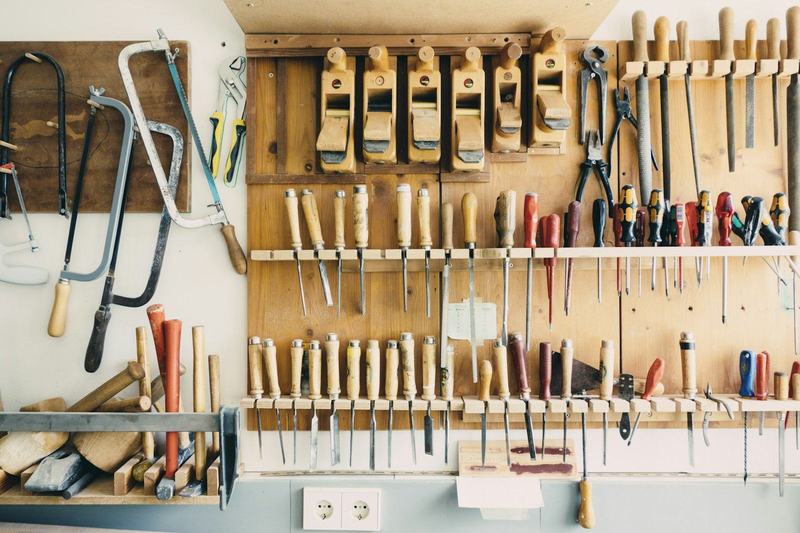
The device runs along on the left, the story on the right. First the DIYer's app — right through to the neighbours who can lend a hand — then the store manager's view, then the manufacturer's. The same data, three perspectives.
Station 1
No form. One sentence is enough; the AI asks for the rest — size, depth, federal state. That last one sounds like a detail and decides the whole project two steps later.
Station 2
Steps, time, difficulty — and for each step the source the information came from. The prototype already surfaces those references today. It is being reworked at the moment; we are happy to show it in a conversation — you can book a meeting right here on the site.
Station 3
Before the digger arrives, CraftPartner checks the project against the state building code. 48 m³ is unproblematic in most federal states — in Baden-Württemberg it isn't. Finding that out afterwards means tearing it down again.
Station 4
He has never welded liner. That doesn't end the project, it produces a microtraining from a library of over 100 hours — nine minutes, and the step is unlocked.
Station 5
The plate compactor and the hot air welder are missing. Rent or buy, with a price range and a source. That very gap is about to become the most interesting figure for retail and manufacturers.
Station 6
Every item with quantity, price and total — including the two days' rental for the plate compactor, which no store leaflet lists next to the concrete. The list comes out of the plan rather than out of a basket, which is why it matches what actually gets built.
At the end there's a number nobody had before — and underneath it, which aisle all of it sits in.
Station 7
Welding liner stays tricky, even after the microtraining. So CraftPartner doesn't look for a contractor but for people nearby who have already needed exactly that skill — and shows what they can do and which tools are sitting in their garage.
They're found through the gap in your own profile, not through an advert. Whoever helps collects completed projects — and gets found faster next time. Lending tools between neighbours quietly becomes the reason to keep the app open once your own project is finished.
Station 9
Step by step, with photo progress. And where DIY ends, the system says so: the pump's electrical connection belongs to a registered trade, not to the owner.
Change of perspective
What is one project for the DIYer is one data point for store management. A thousand of them make a picture of the catchment area nobody has today: who is planning what around here — and where it falls apart.
Station 10
Seventeen per cent of planned projects are abandoned, mostly over a missing machine. That isn't a statistic, it's an order list: one more rental machine, one timber item reordered, one training topic for two advisors.
Change of perspective
For the first time he sees which projects need his tool without anyone owning it — by project type, by region, and whether it ends in a rental or a purchase. No panel, no extrapolation: the need itself.
Station 12
Conventional advertising scatters on suspicion. It is billed by reach and mostly reaches people who aren't building anything — the wastage the trade has budgeted for over decades.
In CraftPartner the tool appears at the moment of actual need: inside a concrete plan, with somebody who decided long ago and is only looking for the right machine. Reach becomes occasion. Advertising budget becomes a stake in the knowledge base — and that keeps working long after the campaign has ended.
Once you're in the plan, you no longer need to interrupt.
CraftPartner doesn't invent expertise. It makes existing expertise reachable: the baumarktwissen.eu learning platform and the semantic network behind it.
Abrasive paper connects to grit, grit to removal rate, removal rate to belt sander. Those edges are what make the answers hold up — and they are where manufacturers feed in their product knowledge: instructions, images, videos, existing e-learnings.
Plus the learning method from the EU project RELOAD: learning in the flow of work, just in time, just enough. Only 30 per cent of knowledge comes from courses — 70 per cent happens at the shelf, from colleagues, in catalogues. CraftPartner serves both from one pool.
A general language model knows the trade from what has been written about it online — forums, blogs, manufacturer pages, all weighted alike and none of it checked. It answers fluently and cites nothing. For which grit belongs on which surface, that will do. For whether a footing has to go 80 centimetres deep, it will not.
CraftPartner builds on existing language models and lays the manufacturers' knowledge on top: encyclopedia entries, instructions, microtrainings, product data — retrieved through the semantic network, at the moment the question is asked, with the source alongside. The model does the phrasing, the network does the proving.
Technically this is retrieval augmented generation: manufacturer content is not trained into the model but read in at query time. That is why it is current the day it is uploaded — and why every answer can say where it came from.
DIYers rarely make the mistake they fear. They make the one they didn't know existed — and it doesn't show up while building, it shows up afterwards: at the building inspection, with the neighbour, with the insurer. CraftPartner checks the project against the applicable rules before anyone starts digging.
State building code
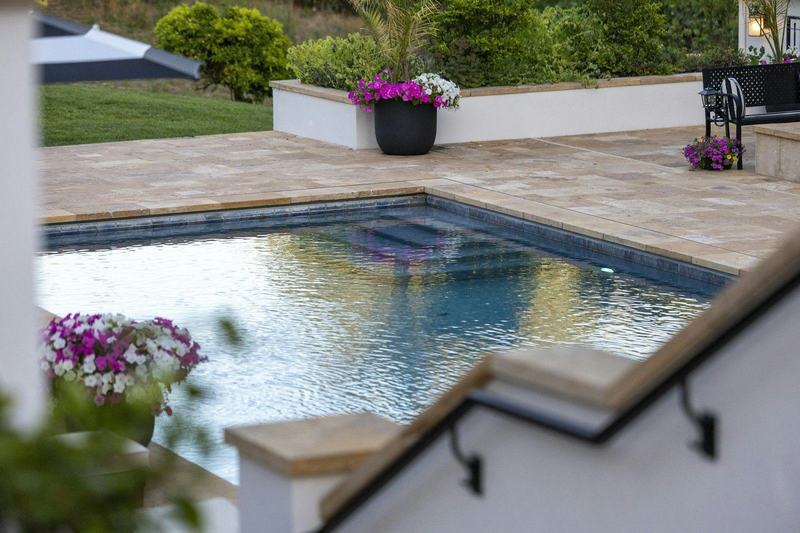
In most federal states a garden pool needs no permit up to 100 m³. In Rhineland-Palatinate and Bavaria the threshold is around 50 m³, in Baden-Württemberg several sources put it at 10 m³. Hesse additionally caps depth at 1.50 m and area at 50 m². The same hole in the ground needs a permit one postcode away.
And: “no permit required” does not mean “no rules apply”. Boundary distances, the local development plan and municipal by-laws still hold.
§ 13 NAV
Work on the fixed electrical installation behind the service head may only be carried out by firms listed in the network operator's installer register. Preparation is allowed — chases, conduit, pulling cable. Connecting is not.
Doing it anyway puts insurance cover at risk if something happens.
Engineering practice
Foundations for posts, pergolas and carports must sit below the frost line, in Germany usually about 80 cm down. Not a statute but accepted engineering practice — yet the mistake only shows after the second winter.
And then the only fix is to start again.
A project planned to be permissible gets finished — and paid for. One that runs into a regulation ends in demolition and returns. And a system that warns about a permit requirement, slowing the sale down, reads as neutral. That is precisely what makes its other recommendations credible.
Rules, standards references and state building codes are nodes and edges like any other content — they fit into the same semantic network without friction and are retrieved just like product knowledge.
CraftPartner points to the applicable rules and names its source. It is not legal advice and not a binding ruling from the building authority.
A precondition, not a claim
When a manufacturer recommends, it recommends itself. When a chain recommends, it recommends its own range. Customers notice immediately.
An industry-wide AI can therefore only be built vendor-neutral — by an independent operator with access to everyone involved. Add niche depth instead of generic answers, content grown over 18 years, direct contacts across industry and retail, manufacturer data sovereignty via MCP and agentic AI, and less dependence on US models.
Free training, a knowledge edge in the conversation, a personal knowledge map and certificates that document qualification.
Free. Tailored product information instead of generic instructions, support through to the finished project, answers around the clock.
European products become visible where buying decisions happen — plus product feedback and marketing insight from real questions.
End customers and sales advisors use the platform and app free of charge — they bring reach and demand data. Manufacturers co-fund the semantic network and the AI. DIY chains and specialist retail buy demand data, own-brand integration and training access. The start runs as a funded project so the platform gains substance first. Terms and figures are in the investor deck.
~180 member companies in Europe's tool industry association~430.000 companies in the EU construction products industry5+ major DIY chains in DACH as the first market
Since 1989 oehl.net has built learning systems for industry and retail — including the international training system for Robert Bosch GmbH. baumarktwissen.eu has been running since 2007, used by Globus, Hagebau, Hornbach, Praktiker and toom among others. The e-learnings were produced with manufacturers including Knipex, Hazet, Bessey, Günzburger Steigtechnik, Kukko and PFERD-Werkzeuge.
The investor deck covers the business model, terms, funding and planning in detail. For retail chains there's a separate session on demand data and own brands.